Introduction
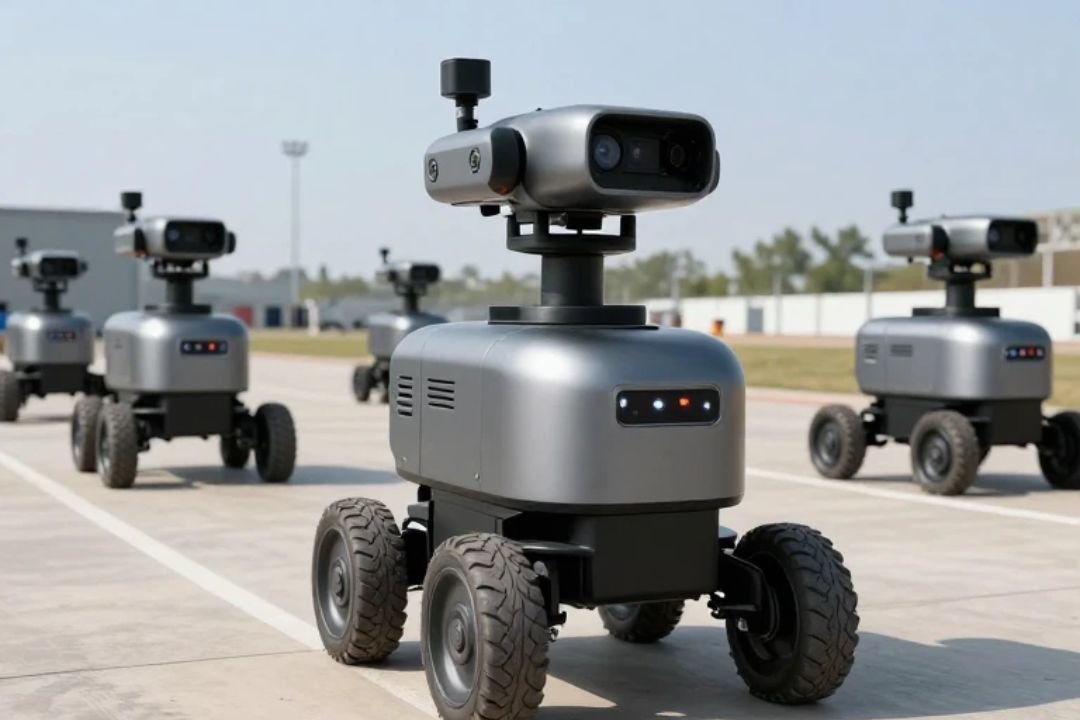
Technology is rapidly transforming the way machines operate, and one of the most impressive advancements in modern robotics is the development of autonomous robots. These intelligent machines are designed to perform tasks independently without continuous human control. By using artificial intelligence, sensors, cameras, and advanced algorithms, autonomous robots can understand their environment, make decisions, and complete complex operations on their own.
Unlike traditional machines that require direct instructions from humans, autonomous robots can analyze situations and respond automatically. They are becoming increasingly important in industries such as manufacturing, transportation, healthcare, agriculture, logistics, and space exploration.
The rise of self-driving machines represents a major step toward a future where robots can work independently and support humans in solving complex challenges. This article explains how autonomous robots work without human control, their applications, benefits, challenges, and future possibilities.
What Are Autonomous Robots?
Autonomous robots are intelligent machines capable of operating independently without constant human supervision. They use artificial intelligence and advanced technologies to sense their surroundings, process information, make decisions, and perform tasks.
A traditional robot usually follows a fixed program created by humans. For example, an industrial robot may repeatedly perform the same movement on a factory assembly line. An autonomous robot, however, can adapt to changing conditions and choose the best action based on the information it receives.
Examples of autonomous robots include:
- Self-driving cars
- Warehouse robots
- Delivery robots
- Robotic vacuum cleaners
- Agricultural robots
- Exploration robots
These machines are designed to complete tasks efficiently while reducing the need for human involvement.
How Do Autonomous Robots Work?
Autonomous robots work through a combination of hardware and software technologies. They use sensors to collect information, artificial intelligence to analyze data, and control systems to perform actions.
The main components that allow autonomous robots to operate independently include:
1. Sensors and Data Collection
Sensors act as the eyes and ears of autonomous robots. They collect information about the environment and help robots understand what is happening around them.
Common sensors used in autonomous robots include:
Cameras
Cameras allow robots to recognize objects, detect obstacles, and understand visual information.
LiDAR Sensors
LiDAR uses laser technology to create detailed maps of surroundings. It is commonly used in self-driving vehicles and navigation systems.
Ultrasonic Sensors
These sensors help robots measure distances and detect nearby objects.
Touch and Motion Sensors
Touch sensors allow robots to interact safely with objects, while motion sensors help maintain balance and movement.
The data collected by sensors is sent to the robot’s processing system for analysis.
2. Artificial Intelligence and Machine Learning
Artificial intelligence is the core technology that makes autonomous robots intelligent. AI allows robots to analyze information, recognize patterns, and make decisions.
Machine learning helps robots improve through experience. Instead of relying only on pre-programmed instructions, robots can learn from previous actions and become more efficient over time.
For example, an autonomous warehouse robot can learn the most efficient routes for moving products, while a self-driving car can improve its ability to recognize road conditions.
3. Computer Vision
Computer vision allows robots to understand and interpret visual information from cameras and sensors.
With computer vision, autonomous robots can:
- Identify objects
- Recognize faces
- Detect obstacles
- Read signs
- Understand their surroundings
This technology is essential for robots that operate in complex environments.
4. Navigation and Mapping Systems
Autonomous robots need to know where they are and how to move safely. Navigation systems help robots create maps and find efficient paths.
Technologies such as Simultaneous Localization and Mapping (SLAM) allow robots to build maps of unknown environments while tracking their own location.
This helps robots move through:
- Warehouses
- Streets
- Hospitals
- Farms
- Exploration areas
5. Decision-Making Algorithms
Autonomous robots use advanced algorithms to decide what actions to take. These systems evaluate information from sensors and choose the safest and most effective response.
For example, a self-driving vehicle must decide whether to stop, turn, accelerate, or avoid an obstacle based on real-time conditions.
Applications of Autonomous Robots
Autonomous robots are being used in many industries because of their ability to work efficiently without constant human control.
1. Self-Driving Vehicles
One of the most well-known examples of autonomous technology is self-driving vehicles. These vehicles use AI, cameras, radar, and sensors to navigate roads without direct human operation.
Self-driving cars can:
- Detect traffic signals
- Avoid obstacles
- Maintain safe distances
- Choose routes
- Respond to road conditions
Autonomous transportation could improve road safety and create more efficient travel systems.
2. Warehouse and Logistics Robots
The logistics industry has adopted autonomous robots to improve storage and delivery operations.
Warehouse robots can:
- Move products
- Organize inventory
- Transport materials
- Optimize delivery processes
These robots help companies increase speed, reduce errors, and handle large amounts of goods efficiently.
3. Healthcare Robots
Autonomous robots are becoming valuable in healthcare environments. They can assist medical workers and improve patient services.
Applications include:
- Delivering medical supplies
- Disinfecting hospital rooms
- Assisting elderly people
- Supporting rehabilitation
Healthcare robots can reduce workload and improve safety in medical facilities.
4. Agricultural Robots
Agriculture is benefiting from autonomous robotic technology. Smart farming robots can perform tasks that improve productivity and reduce resource waste.
Applications include:
- Crop monitoring
- Automated harvesting
- Weed detection
- Soil analysis
Autonomous agricultural robots help farmers manage large areas more efficiently.
5. Space Exploration Robots
Autonomous robots are essential for exploring environments where humans cannot easily travel.
Space robots can:
- Explore planets
- Collect scientific data
- Analyze soil and rocks
- Perform maintenance tasks
Because they can operate independently, they are valuable for missions in extreme environments.
6. Home and Personal Robots
Autonomous robots are becoming common in homes. Smart home robots can perform everyday tasks without human control.
Examples include:
- Robotic vacuum cleaners
- Smart security robots
- Personal assistant robots
These machines improve convenience and help people manage daily activities.
Benefits of Autonomous Robots
Autonomous robots provide many advantages across different industries.
1. Increased Efficiency
Robots can perform tasks continuously without fatigue, improving productivity and reducing delays.
2. Improved Safety
Autonomous robots can work in dangerous environments where human involvement may be risky.
Examples include:
- Disaster areas
- Chemical facilities
- Deep-sea exploration
- Hazardous industrial locations
3. Reduced Human Workload
Robots can handle repetitive and time-consuming tasks, allowing humans to focus on more complex activities.
4. Greater Accuracy
AI-powered robots can perform precise operations with fewer mistakes, improving quality and reliability.
5. Cost Savings
Although the initial investment can be high, autonomous robots may reduce long-term operational costs through improved efficiency.
Challenges of Autonomous Robots
Despite their benefits, autonomous robots face several challenges.
Technical Complexity
Developing robots that can understand unpredictable environments is extremely difficult. Real-world situations are often more complicated than controlled testing conditions.
High Development Costs
Advanced sensors, AI systems, and robotic hardware require significant investment.
Safety Concerns
Ensuring that autonomous robots make safe decisions is one of the most important challenges.
Cybersecurity Risks
Connected robots may become targets for hacking and cyberattacks. Strong security systems are needed to protect autonomous machines.
Ethical Issues
The growth of autonomous robots raises questions about privacy, employment, and responsibility when machines make decisions.
Future of Autonomous Robots
The future of autonomous robots is expected to bring even more advanced and intelligent machines. Improvements in artificial intelligence, sensors, and computing power will allow robots to perform increasingly complex tasks.
Future trends include:
More Intelligent Decision-Making
AI systems will become better at understanding situations and making human-like decisions.
Human-Robot Collaboration
Robots will increasingly work alongside humans in workplaces and daily life.
Advanced Learning Capabilities
Future autonomous robots will learn faster and adapt to new environments more effectively.
Expansion Across Industries
More industries will adopt autonomous robots to improve efficiency and solve complex problems.
How Autonomous Robots Will Change the Future
Autonomous robots are expected to transform society by creating smarter, safer, and more efficient systems. They will support humans in areas where speed, accuracy, and independence are essential.
From self-driving transportation to automated healthcare services, autonomous robots will become an important part of modern life. Instead of replacing humans completely, these machines will likely become powerful tools that enhance human abilities.
As technology continues to advance, autonomous robots will move from science fiction concepts to practical solutions used around the world.
Conclusion
Autonomous robots are changing the future by enabling machines to operate independently without constant human control. Through artificial intelligence, sensors, computer vision, and advanced algorithms, these self-driving machines can understand their environment and make intelligent decisions.
From transportation and healthcare to agriculture and space exploration, autonomous robots are creating new possibilities across multiple industries. Although challenges such as safety, cost, and ethical concerns remain, continuous innovation is making these technologies more reliable and accessible.
The future of robotics will be defined by intelligent machines that work together with humans, creating a more automated, efficient, and connected world.
