Introduction
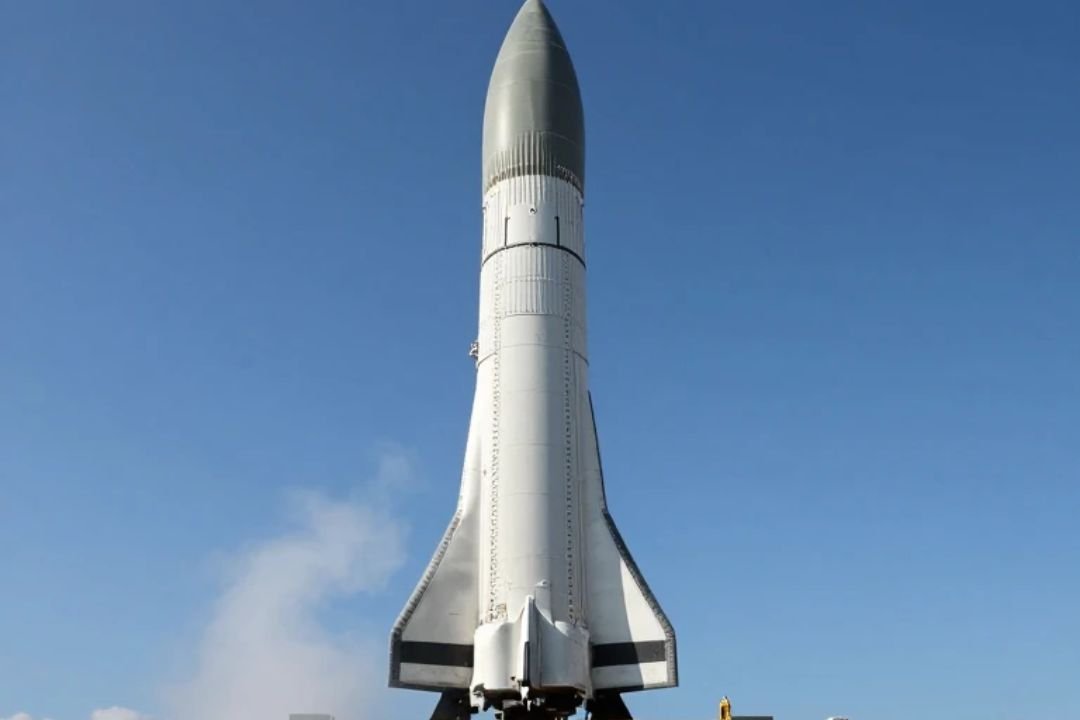
Rocket technology is one of the most advanced achievements in human engineering and a key element of modern space exploration. Without powerful rockets, humans would not be able to launch satellites, explore distant planets, conduct scientific research in space, or send astronauts beyond Earth. Rockets are the vehicles that make space travel possible by overcoming Earth’s gravity and carrying valuable payloads into orbit and beyond.
Over the years, rocket technology has evolved from simple experimental designs into highly sophisticated systems capable of reaching other worlds. Today, rockets support communication networks, weather monitoring, navigation systems, scientific discoveries, and commercial space activities. As space exploration continues to expand, advancements in rocket science are creating new opportunities for humanity’s future among the stars.
What Is Rocket Technology?
Rocket technology refers to the science and engineering involved in designing, building, and operating rockets. A rocket is a vehicle that generates powerful thrust by burning fuel and releasing high-speed gases. According to Newton’s Third Law of Motion, every action has an equal and opposite reaction. Rockets move forward because the force created by expelled gases pushes them in the opposite direction.
Unlike airplanes, rockets do not need air to operate. This makes them suitable for space travel, where there is no atmosphere. Rockets carry their own fuel and oxygen supply, allowing them to function in the vacuum of space.
Modern rockets are designed with advanced materials, computer systems, engines, and navigation technologies to achieve safe and efficient launches.
The History of Rocket Development
The history of rockets dates back hundreds of years. Early rockets were developed in ancient China and were mainly used for military purposes. These early designs used simple solid fuels and had limited range and power.
Rocket technology advanced significantly during the 20th century. Scientists began studying the principles of spaceflight and developing more powerful propulsion systems. The work of rocket pioneers helped establish the foundation of modern space exploration.
In the mid-20th century, rockets became powerful enough to launch satellites and spacecraft. The development of large launch vehicles made important achievements possible, including human spaceflight and missions to the Moon.
Today, rockets are more advanced than ever, combining decades of research with modern computer technology and innovative engineering.
How Rockets Work: The Science of Propulsion
The most important part of any rocket is its propulsion system. Rocket engines create the force needed to lift the vehicle from Earth and accelerate it through space.
Most modern rockets use either liquid fuel or solid fuel propulsion systems. Liquid-fuel rockets use separate tanks containing fuel and oxidizer, which are mixed and burned inside the engine. The resulting hot gases expand rapidly and escape through a nozzle, creating thrust.
Solid-fuel rockets contain fuel and oxidizer combined into a solid material. They are simpler in design and can produce powerful thrust quickly, making them useful for certain missions.
Rocket engines must generate enormous amounts of energy because escaping Earth’s gravity requires tremendous force. Engineers carefully design engines to maximize efficiency, reliability, and performance.
The Main Components of a Rocket
A rocket consists of several major components that work together to complete a successful launch.
1. Rocket Engines
The engines are the heart of the rocket. They produce the thrust required for liftoff and acceleration. Advanced engines are designed to operate under extreme temperatures and pressures.
2. Fuel Tanks
Fuel tanks store the propellants needed for combustion. They must be strong enough to handle pressure while remaining lightweight to reduce the rocket’s overall mass.
3. Payload Section
The payload is the object carried by the rocket. It may include satellites, scientific instruments, cargo, or spacecraft containing astronauts.
4. Guidance and Control Systems
Modern rockets use advanced computers, sensors, and navigation systems to control their flight path. These systems ensure that the rocket reaches its intended destination accurately.
5. Structural Framework
The rocket structure connects all components and protects them during launch. Engineers use lightweight materials such as advanced alloys and composites to improve performance.
The Importance of Rocket Launch Systems
Rocket launch systems are essential for placing objects into space. Satellites launched by rockets provide services that people rely on every day, including internet communication, GPS navigation, weather forecasting, and television broadcasting.
Scientific missions also depend on rockets to send telescopes, probes, and research equipment into space. These launches help scientists study Earth, the solar system, and the wider universe.
Human spaceflight missions require especially powerful rockets capable of carrying astronauts and life-support equipment. The success of these missions depends on reliable and carefully engineered launch systems.
Reusable Rocket Technology
One of the biggest advancements in modern rocket technology is the development of reusable rockets. Traditionally, rockets were designed for single use, meaning most parts were destroyed after launch.
Reusable rocket systems allow certain rocket components to return to Earth and be used again. This reduces launch costs and makes space missions more affordable.
Reusable rockets are changing the space industry by increasing launch frequency and encouraging new commercial opportunities. This technology may play a major role in future missions to the Moon, Mars, and beyond.
Rocket Technology and Space Exploration
Rocket technology is the foundation of space exploration. Every mission beyond Earth requires a powerful launch vehicle capable of carrying spacecraft through the atmosphere and into space.
Rockets have enabled humanity to explore the Moon, study planets, observe distant galaxies, and conduct experiments in space. Future exploration missions will depend on even more advanced rockets capable of traveling farther and carrying larger payloads.
For missions to Mars and other distant destinations, engineers are developing new propulsion technologies that could reduce travel time and improve mission safety.
The Role of Private Companies in Rocket Innovation
The space industry has experienced major changes with the involvement of private companies. Commercial organizations are investing in new rocket designs, advanced manufacturing techniques, and reusable launch systems.
Private space companies are helping reduce the cost of accessing space and increasing the number of launches worldwide. Their innovations are supporting satellite deployment, scientific research, space tourism, and future exploration projects.
Competition in the commercial space sector is encouraging faster development of new technologies and making space more accessible.
Challenges in Rocket Technology
Despite major progress, rocket development remains one of the most difficult areas of engineering. Rockets must operate in extreme conditions, including intense heat, vibration, and pressure.
The cost of designing and testing rockets is extremely high. Engineers must perform thousands of tests to ensure safety and reliability before a launch.
Environmental concerns are also becoming increasingly important. Rocket launches can produce emissions and contribute to atmospheric pollution. Researchers are exploring cleaner fuels and more sustainable propulsion methods to reduce environmental impact.
Another challenge is improving launch safety. Protecting astronauts, equipment, and nearby communities requires advanced technology and strict safety procedures.
The Future of Rocket Technology
The future of rocket technology is expected to bring even more exciting developments. Scientists and engineers are researching advanced propulsion systems, including nuclear propulsion and more efficient rocket engines.
Future rockets may be faster, more powerful, and capable of carrying humans to distant planets. Improved automation and artificial intelligence will help rockets perform complex tasks with greater accuracy.
As humanity moves toward becoming a multi-planetary civilization, rocket technology will remain essential for exploring new worlds and expanding our presence beyond Earth.
Conclusion
Rocket technology is the driving force behind space exploration and modern space activities. From launching satellites that connect the world to carrying spacecraft on missions across the solar system, rockets have transformed our understanding of space.
The science behind powerful space launches combines physics, engineering, computer technology, and innovation. Although challenges such as cost, safety, and environmental impact remain, continuous advancements are making rockets more efficient and accessible.
As technology continues to improve, rockets will open new possibilities for exploration, scientific discovery, and human expansion beyond Earth. The future of space travel depends on these powerful machines that carry our dreams from the ground into the vast universe.
