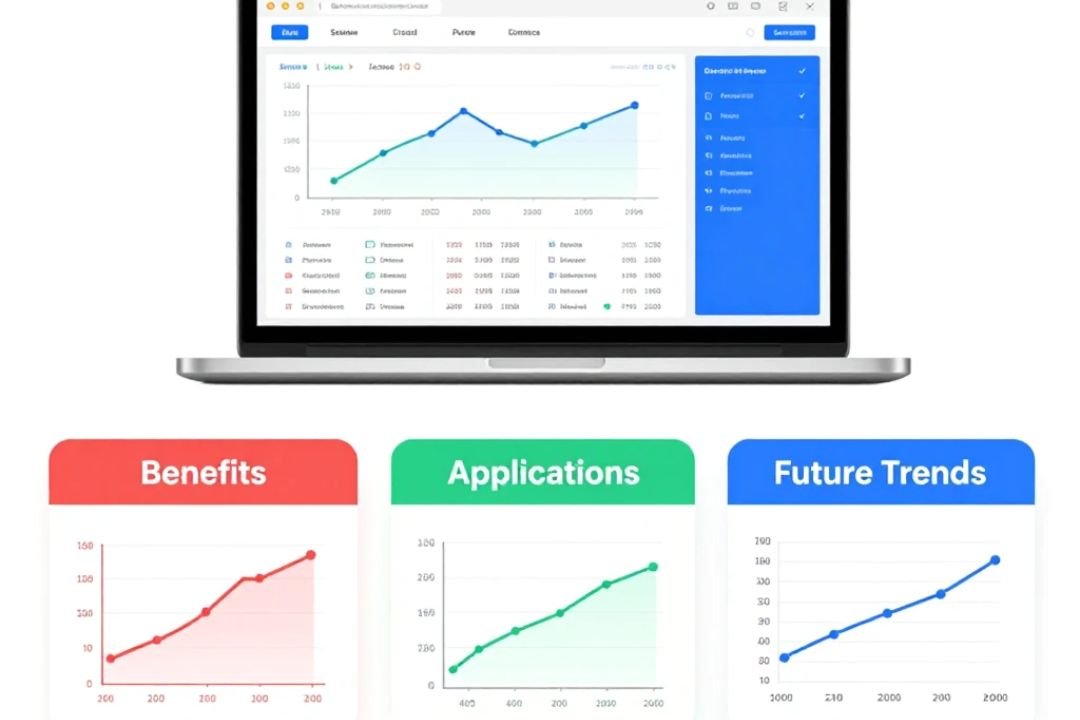
Introduction
Data science has become one of the most valuable fields in the modern digital economy. Every day, businesses, governments, organizations, websites, mobile applications, and connected devices generate enormous amounts of data. However, raw data has limited value unless it can be organized, analyzed, and transformed into useful information.
Data science combines statistics, mathematics, programming, machine learning, artificial intelligence, and domain knowledge to discover meaningful patterns in data. Organizations use these insights to make better decisions, understand customers, improve operations, predict trends, and develop new products and services.
From healthcare and finance to retail, transportation, technology, and education, data science applications are expanding rapidly. As artificial intelligence and big data continue to grow in 2026 and beyond, data science is expected to become even more important.
What Is Data Science?
Data science is the process of collecting, cleaning, analyzing, interpreting, and using data to solve problems and support decision-making.
A data scientist may work with structured information such as spreadsheets and databases or unstructured data such as text, images, audio, and video.
The field combines several important disciplines, including:
- Statistics
- Mathematics
- Programming
- Machine learning
- Artificial intelligence
- Data visualization
- Database management
- Business analysis
The main goal of data science is to turn complex data into useful insights that can support real-world decisions.
How Does Data Science Work?
A typical data science process includes several stages.
1. Data Collection
The first step is gathering relevant information from different sources.
Data may come from websites, applications, sensors, databases, surveys, social media, customer transactions, or business systems.
The quality of the final analysis depends heavily on the quality and relevance of the collected data.
2. Data Cleaning
Raw data often contains missing values, duplicate records, incorrect information, and inconsistencies.
Data scientists clean and organize datasets before analyzing them.
This process can involve removing duplicates, correcting errors, handling missing information, and standardizing formats.
3. Data Analysis
Once data is prepared, analysts use statistical methods and computational tools to identify patterns and relationships.
Data analysis can help answer questions such as:
- What happened?
- Why did it happen?
- What factors influence the result?
- What trends are developing?
4. Machine Learning
Machine learning allows computers to learn patterns from data and make predictions or classifications.
For example, a business might use machine learning to predict customer demand or identify potentially fraudulent transactions.
5. Data Visualization
Charts, graphs, dashboards, and other visual tools make complex information easier to understand.
Effective data visualization helps decision-makers quickly identify important trends and relationships.
6. Decision-Making
The final goal is to use data-driven insights to make better decisions.
A data science project is most valuable when its results lead to measurable improvements in a real-world process.
Benefits of Data Science
1. Better Decision-Making
One of the biggest benefits of data science is improved decision-making.
Instead of relying entirely on assumptions or intuition, businesses can use evidence from historical and real-time data.
Data-driven decisions can help organizations identify opportunities, reduce risks, and allocate resources more effectively.
2. Improved Customer Understanding
Businesses can analyze customer behavior to understand preferences, purchasing patterns, and engagement.
This information can help companies develop personalized recommendations, improve products, and create more targeted marketing campaigns.
For example, online platforms can analyze user behavior to recommend products, videos, music, or articles that may be relevant to individual users.
3. Increased Operational Efficiency
Data science can identify inefficiencies in business operations.
Companies can analyze production processes, supply chains, employee workflows, and resource usage to determine where improvements are needed.
Predictive analytics can also help organizations anticipate equipment failures and schedule maintenance before major problems occur.
4. Fraud Detection
Financial institutions and online businesses use data science to detect suspicious behavior.
Machine learning models can analyze transaction patterns and identify activities that may indicate fraud.
These systems can monitor large numbers of transactions more quickly than manual processes.
5. Business Growth
Data science can help companies identify new market opportunities.
By analyzing customer trends, competitors, sales data, and market behavior, organizations can discover areas for expansion.
Data-driven insights can support product development and marketing strategies.
Major Applications of Data Science
1. Healthcare
Healthcare is one of the most important areas for data science.
Hospitals and researchers can analyze large datasets to identify patterns related to diseases, treatments, patient outcomes, and healthcare operations.
Data science can support medical research, resource planning, patient monitoring, and operational efficiency.
AI and machine learning may also assist healthcare professionals in analyzing medical images and other complex information.
Because healthcare data is sensitive, strong privacy and security practices are essential.
2. Finance
Banks, insurance companies, investment firms, and financial technology businesses rely heavily on data.
Data science can support fraud detection, credit risk analysis, financial forecasting, customer segmentation, and market analysis.
Machine learning can identify unusual transaction patterns and help organizations detect potential risks.
3. Retail and E-Commerce
Retailers use data science to understand customers and optimize business operations.
E-commerce platforms can analyze browsing behavior, purchases, product searches, and customer feedback.
These insights can support personalized recommendations, inventory management, pricing strategies, and marketing campaigns.
4. Marketing
Modern marketing generates large amounts of data.
Businesses can use data science to measure campaign performance, understand customer segments, predict conversion rates, and optimize advertising.
Predictive analytics can help marketers determine which customers are more likely to respond to specific offers.
5. Transportation
Transportation companies can use data science to improve routes, estimate travel times, manage fleets, and predict demand.
Ride-sharing platforms can analyze real-time information to match drivers and passengers efficiently.
Airlines and logistics companies can also use data to improve scheduling and resource management.
6. Manufacturing
Smart manufacturing depends heavily on data.
Factories can collect information from machines, sensors, production lines, and quality-control systems.
Data science can help identify equipment problems, improve production efficiency, reduce waste, and maintain product quality.
Predictive maintenance is particularly valuable because it can help organizations identify potential machine failures before they cause costly downtime.
7. Education
Educational institutions can use data science to understand student performance and improve learning outcomes.
Data analysis can help identify students who may need additional support.
Learning platforms can also personalize educational content based on individual progress and learning behavior.
8. Cybersecurity
Cybersecurity teams can use data science to identify unusual activity and potential threats.
Machine learning systems can analyze network traffic, login behavior, device activity, and other information.
By recognizing abnormal patterns, data science tools can help security teams investigate potential attacks more quickly.
Data Science and Artificial Intelligence
Data science and artificial intelligence are closely connected, but they are not exactly the same.
Data science focuses on extracting insights and knowledge from data. Artificial intelligence focuses on creating systems capable of performing tasks that traditionally require human intelligence.
Machine learning is an important connection between the two fields.
Data scientists often prepare and analyze datasets that are used to train machine learning models. AI systems can then use these models to make predictions, classifications, recommendations, or decisions.
The growth of generative AI is also creating new opportunities for data professionals.
Important Data Science Tools and Technologies
Data scientists use a wide range of technologies.
Python is one of the most popular programming languages for data science because it has extensive libraries for data analysis, machine learning, and visualization.
R is widely used for statistical computing and data analysis.
SQL is essential for working with relational databases.
Machine learning frameworks help professionals build predictive models.
Cloud computing platforms provide scalable infrastructure for storing and processing large datasets.
Data visualization tools help transform complex datasets into understandable dashboards and reports.
The exact tools used depend on the organization’s requirements and the type of project.
Future Trends in Data Science
1. Automated Data Science
Automation is making it easier to perform certain data science tasks.
Automated systems can help with data preparation, model selection, feature engineering, and evaluation.
This can allow professionals to focus more on business problems and advanced analysis.
2. AI-Powered Data Analysis
Artificial intelligence is making data analysis more accessible.
AI assistants can help users explore datasets, generate summaries, identify trends, and create visualizations.
As these tools improve, non-technical employees may be able to perform more advanced data analysis without writing extensive code.
3. Real-Time Analytics
Businesses increasingly need information immediately rather than waiting for daily or weekly reports.
Real-time analytics can help organizations respond quickly to changing customer behavior, market conditions, security events, and operational problems.
4. Edge Analytics
As IoT devices generate more data, processing information closer to the source can become increasingly valuable.
Edge computing can reduce latency and limit the amount of information that needs to be transferred to centralized systems.
This can be particularly useful for manufacturing, transportation, smart cities, and connected devices.
5. Responsible and Ethical Data Science
As data collection expands, privacy, fairness, transparency, and responsible AI will become increasingly important.
Organizations need to understand how data is collected and used.
They must also monitor algorithms for potential bias and ensure that sensitive information is appropriately protected.
Ethical data science will become an important part of building public trust.
Data Science Career Opportunities
The growth of data-driven technology is creating many career opportunities.
Common roles include:
- Data Scientist
- Data Analyst
- Machine Learning Engineer
- Data Engineer
- Business Intelligence Analyst
- AI Specialist
- Data Visualization Specialist
- Research Scientist
- Analytics Consultant
People interested in data science can begin by learning mathematics, statistics, programming, databases, data visualization, and machine learning.
Practical projects are particularly useful because they allow learners to apply theoretical knowledge to real-world datasets.
Challenges in Data Science
Although data science offers significant benefits, organizations face several challenges.
Poor-quality data can produce unreliable results. Data privacy regulations can limit how certain information is collected and processed.
Large datasets can also be expensive to store and analyze.
Another challenge is explaining complex machine learning models to people who need to make business decisions based on their results.
Organizations therefore need professionals who understand both technical concepts and business requirements.
The Future of Data Science
The future of data science will be strongly influenced by artificial intelligence, automation, cloud computing, real-time analytics, and increasingly large datasets.
Data science tools are likely to become easier to use, allowing more employees to work with data directly.
At the same time, highly skilled professionals will continue to be needed for complex problems involving machine learning, statistical modeling, data architecture, and responsible AI.
The role of data scientists may gradually shift from manually performing every analytical task toward designing systems, validating models, solving complex problems, and translating data into strategic decisions.
Conclusion
Data science has become a critical technology for organizations operating in a data-driven world. By combining statistics, programming, machine learning, artificial intelligence, and analytical techniques, data science transforms raw information into valuable insights.
The benefits of data science include better decision-making, improved customer understanding, operational efficiency, fraud detection, business growth, and more accurate predictions.
Its applications extend across healthcare, finance, retail, marketing, manufacturing, transportation, education, and cybersecurity.
Looking toward 2026 and beyond, automation, AI-powered analytics, real-time processing, edge computing, and responsible data practices will continue shaping the industry.
As businesses generate more information and rely increasingly on digital systems, the ability to understand and use data effectively will remain a major competitive advantage. Data science is therefore not just a technology trend; it is becoming a fundamental part of how modern organizations operate, innovate, and make decisions.
