Introduction
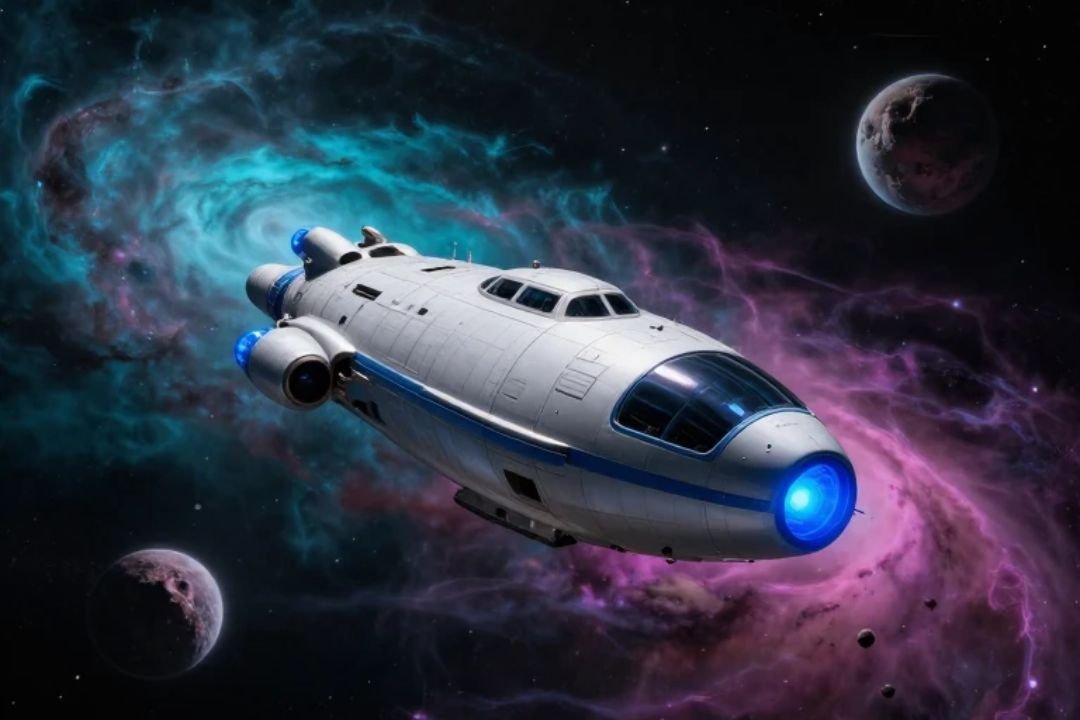
Space exploration is one of humanity’s greatest achievements and a symbol of curiosity, innovation, and the desire to understand the unknown. For centuries, humans have looked at the stars and wondered about the mysteries of the universe. Today, advanced technology, powerful spacecraft, and scientific discoveries are helping us explore new frontiers beyond Earth.
From landing humans on the Moon to sending robotic missions to distant planets, space exploration has expanded our understanding of the universe and our place within it. It has contributed to scientific progress, technological development, and international cooperation. As nations and private companies continue to invest in space missions, humanity is entering a new era of exploration that could lead to discoveries beyond our imagination.
What Is Space Exploration?
Space exploration is the process of studying outer space through spacecraft, satellites, telescopes, and human missions. It involves investigating planets, moons, stars, galaxies, and other cosmic objects to learn more about the universe.
Space exploration includes both robotic and human activities. Robotic spacecraft collect information from distant worlds, while astronauts conduct experiments and research in space environments. These missions help scientists understand the origins of the universe, the possibility of life beyond Earth, and the future of human civilization in space.
The History of Space Exploration
The journey of space exploration began in the 20th century with rapid advancements in rocket technology. In 1957, the launch of Sputnik 1 marked the beginning of the space age. This historic event demonstrated that humans could send artificial objects into orbit around Earth.
A few years later, space exploration reached a major milestone when humans traveled beyond Earth. In 1961, Yuri Gagarin became the first person to orbit Earth, proving that human spaceflight was possible. One of the most significant achievements came in 1969 when astronauts successfully landed on the Moon during the Apollo 11 mission.
Since then, space exploration has continued to grow. Space agencies have launched missions to study planets, build space stations, observe distant galaxies, and search for signs of life beyond Earth.
Exploring the Moon: Humanity’s First Step Beyond Earth
The Moon has always been a major focus of space exploration because it is Earth’s closest natural neighbor. The first Moon landing was a historic moment that changed the way humans viewed space.
Today, interest in lunar exploration has increased again. Scientists and space agencies are planning new missions to study the Moon’s resources, environment, and potential as a future base for deeper space exploration.
The Moon could serve as a stepping stone for missions to Mars and other destinations. Its lower gravity and proximity to Earth make it an ideal location for testing technologies needed for future space travel.
The Search for Life Beyond Earth
One of the biggest questions in space exploration is whether life exists beyond our planet. Scientists are studying planets, moons, and other environments to find evidence of past or present life.
Mars is one of the most important targets in this search. Robotic rovers have explored the Martian surface, analyzing rocks and soil for clues about ancient conditions. Scientists believe Mars may have once had liquid water, which is an essential ingredient for life.
Other locations, such as the icy moons of Jupiter and Saturn, are also attracting scientific interest. Some of these moons may contain underground oceans where conditions could potentially support life.
The discovery of life beyond Earth would be one of the most important events in human history and would completely change our understanding of the universe.
The Role of Space Technology
Modern space exploration depends on advanced technology. Powerful rockets, artificial intelligence, robotics, and high-performance computers allow scientists to explore environments that are impossible for humans to reach directly.
Satellites play a major role in space research by collecting data about Earth, the solar system, and distant galaxies. Space telescopes allow scientists to observe objects millions or even billions of light-years away.
Technological developments created for space missions often improve life on Earth. Innovations in communication, medical equipment, materials science, and computer technology have benefited society through space research.
Human Missions and Life in Space
Human spaceflight represents one of the most challenging achievements in exploration. Astronauts living in space must overcome problems such as weightlessness, radiation exposure, and limited resources.
The International Space Station (ISS) has provided scientists with a unique laboratory for studying life in microgravity. Research conducted aboard the ISS has improved our understanding of human health, biology, and engineering.
Long-term human missions to other planets will require new technologies for life support, food production, transportation, and protection from space hazards. These challenges are driving innovation and preparing humanity for future exploration.
Mars: The Next Great Frontier
Mars is considered one of the most promising destinations for future human exploration. Its similarities to Earth, including seasons and geological features, make it an important subject of scientific research.
Exploring Mars could help answer questions about planetary evolution and whether humans can survive on another world. Space agencies and private companies are developing technologies for future crewed missions to Mars.
A human mission to Mars would be a historic achievement, but it would also require solving many difficult challenges. Scientists must develop reliable spacecraft, advanced habitats, and systems to protect astronauts during long journeys through space.
The Growth of Commercial Space Exploration
In recent years, private companies have become increasingly involved in space exploration. Commercial space organizations are developing new rockets, spacecraft, and satellite systems to reduce the cost of accessing space.
Private space companies are working on projects such as space tourism, satellite launches, lunar missions, and future human exploration. Their involvement is accelerating innovation and creating new opportunities in the space industry.
The growth of commercial space exploration may make space more accessible and support a future where humans can travel beyond Earth more frequently.
Benefits of Space Exploration
Space exploration provides numerous benefits for humanity. Scientific discoveries from space missions improve our understanding of Earth, the solar system, and the universe.
Space technology helps monitor climate change, predict natural disasters, improve communication networks, and support navigation systems. Research conducted in space also contributes to advances in medicine, engineering, and environmental science.
Beyond practical benefits, space exploration inspires future generations to study science, technology, engineering, and mathematics. It encourages creativity, problem-solving, and international cooperation.
Challenges of Exploring Space
Although space exploration offers exciting opportunities, it also presents significant challenges. Space missions are expensive, complex, and dangerous. Astronauts face risks from radiation, extreme temperatures, and the psychological effects of long-duration missions.
Another major challenge is the distance between Earth and other planets. Traveling to Mars, for example, can take several months and requires careful planning.
Space debris is also becoming a growing concern. Thousands of inactive satellites and fragments orbit Earth, creating risks for spacecraft and future missions.
Solving these challenges will require global cooperation, technological innovation, and responsible management of space activities.
The Future of Space Exploration
The future of space exploration is filled with possibilities. Scientists are working on missions to return humans to the Moon, explore Mars, and study distant worlds.
Future spacecraft may use advanced propulsion systems, artificial intelligence, and autonomous technology to travel farther and explore more efficiently. Space habitats and colonies may eventually allow humans to live beyond Earth.
As our knowledge and technology continue to improve, space exploration will open new frontiers and help humanity answer some of the biggest questions about existence.
Conclusion
Space exploration represents humanity’s endless curiosity and ambition to discover what lies beyond Earth. From the first satellites to modern planetary missions, every achievement has expanded our understanding of the universe.
Exploring space helps scientists discover new worlds, search for life, develop advanced technologies, and prepare for the future of human civilization. Although many challenges remain, continued innovation and cooperation can help us reach new destinations among the stars.
The journey of space exploration is far from over. As we continue discovering new frontiers beyond Earth, we move closer to unlocking the mysteries of the universe and creating a future where humanity becomes a truly spacefaring civilization.
