Introduction
The Next-Generation Internet of Things (IoT) is revolutionizing the way we live, work, and interact with technology. By connecting everyday devices to the internet, IoT creates intelligent ecosystems where machines communicate, analyze data, and perform tasks with minimal human intervention. From smart homes and wearable devices to industrial automation and connected healthcare, IoT is driving a new era of convenience, efficiency, and innovation.
As technologies like Artificial Intelligence (AI), Machine Learning (ML), 5G, Edge Computing, and Cloud Computing continue to evolve, the capabilities of IoT are expanding rapidly. These advancements enable businesses and individuals to automate processes, improve decision-making, reduce costs, and enhance security.
In this comprehensive guide, you’ll explore Next-Generation Internet of Things: Smart Living & Automation, including its benefits, technologies, applications, future trends, challenges, and best practices. Whether you’re a technology enthusiast, business owner, student, or IT professional, this SEO-friendly article will help you understand how IoT is shaping the connected world of tomorrow.
What Is the Internet of Things (IoT)?
The Internet of Things (IoT) is a network of physical devices equipped with sensors, software, and internet connectivity that allows them to collect, exchange, and process data.
These devices communicate with each other and with cloud-based systems to automate tasks and provide real-time insights.
Examples of IoT devices include:
- Smart speakers
- Smart thermostats
- Wearable fitness trackers
- Smart security cameras
- Connected appliances
- Smart lighting systems
- Industrial sensors
- Connected vehicles
- Medical monitoring devices
The primary objective of IoT is to create intelligent environments where devices work together to improve productivity, convenience, safety, and sustainability.
How Next-Generation IoT Works
Modern IoT systems combine advanced technologies to deliver seamless automation and connectivity.
1. Smart Sensors
Sensors collect data such as temperature, humidity, motion, energy usage, pressure, and location.
2. Network Connectivity
Data is transmitted using Wi-Fi, Bluetooth, Zigbee, LoRaWAN, LTE, or 5G networks.
3. Edge and Cloud Computing
Data is processed locally through edge devices or centrally through cloud platforms for faster analysis.
4. Artificial Intelligence
AI analyzes collected information, identifies patterns, predicts outcomes, and automates decisions.
5. User Control
Users interact with IoT devices through mobile applications, web dashboards, or voice assistants for remote monitoring and management.
Benefits of Next-Generation IoT
The latest generation of IoT technology provides numerous advantages across homes, businesses, and industries.
Smart Automation
IoT automates routine tasks, reducing manual effort and increasing efficiency.
Real-Time Monitoring
Connected devices continuously monitor systems, equipment, and environments.
Improved Decision-Making
Businesses gain actionable insights through real-time analytics and predictive intelligence.
Cost Savings
Automation and predictive maintenance help reduce downtime and operational expenses.
Enhanced Security
Smart surveillance systems, connected alarms, and intelligent access controls improve safety.
Energy Efficiency
IoT-powered energy management systems optimize electricity usage and reduce waste.
Smart Living with IoT
One of the biggest impacts of IoT is the transformation of everyday living through smart technologies.
Smart Homes
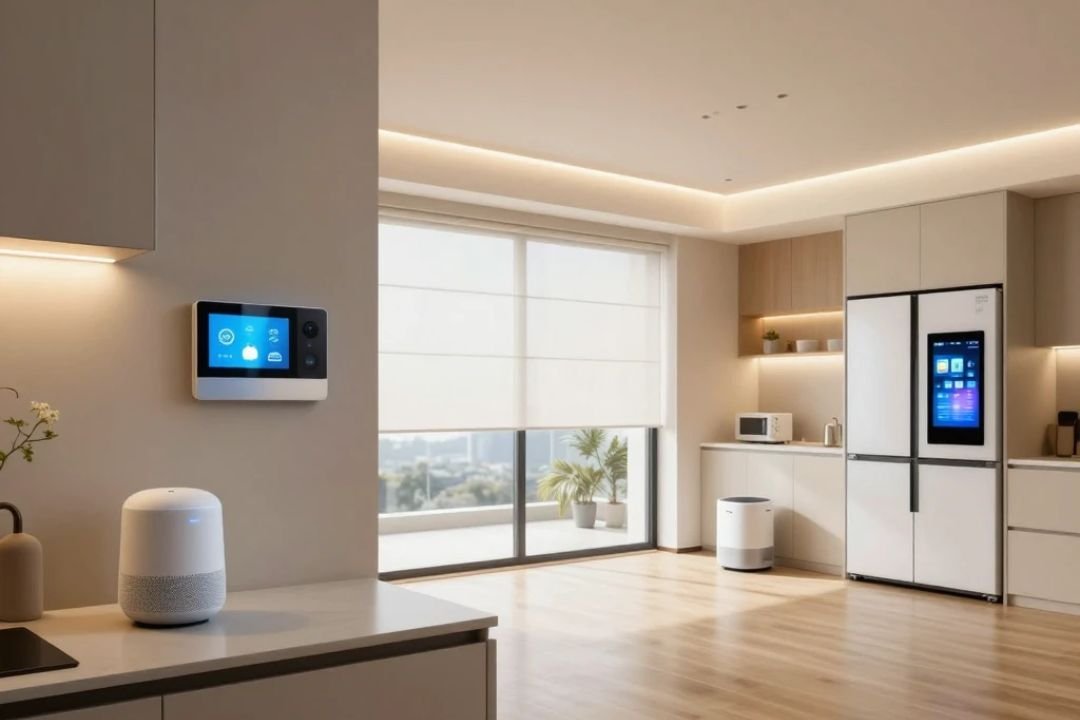
Modern homes use connected devices to improve comfort, security, and energy efficiency.
Popular smart home technologies include:
- Voice-controlled assistants
- Smart lighting
- Smart locks
- Smart thermostats
- Connected doorbells
- Smart kitchen appliances
- Automated blinds
Homeowners can control these devices remotely using smartphones or voice commands.
Wearable Technology
Wearable IoT devices help users monitor their health and daily activities.
Examples include:
- Smartwatches
- Fitness trackers
- Heart rate monitors
- Sleep tracking devices
- Blood oxygen monitors
These devices encourage healthier lifestyles while supporting preventive healthcare.
Smart Entertainment
Connected entertainment systems provide personalized experiences through:
- Smart TVs
- Streaming devices
- Voice-controlled speakers
- Home automation systems
Users can manage their entertainment environment from a single mobile app.
Automation Across Industries
IoT is transforming businesses through intelligent automation.
Manufacturing
Industrial IoT (IIoT) enables:
- Predictive maintenance
- Equipment monitoring
- Automated production
- Quality assurance
- Supply chain optimization
Manufacturers improve efficiency while reducing production costs.
Healthcare
Healthcare organizations use IoT for:
- Remote patient monitoring
- Smart medical devices
- Wearable health trackers
- Medication management
- Hospital asset tracking
IoT enables faster diagnosis and personalized patient care.
Agriculture
Smart farming technologies help optimize agricultural operations.
Applications include:
- Soil monitoring
- Weather analysis
- Livestock tracking
- Precision irrigation
- Crop health monitoring
Farmers increase productivity while conserving natural resources.
Retail
Retail businesses benefit from:
- Smart inventory management
- Customer behavior analysis
- Automated checkout systems
- Personalized promotions
- Digital payment solutions
IoT improves customer experiences and operational efficiency.
Transportation
Connected transportation systems support:
- Fleet management
- Vehicle diagnostics
- Real-time navigation
- Traffic optimization
- Predictive maintenance
IoT enhances safety while reducing transportation costs.
Technologies Driving Next-Generation IoT
Several advanced technologies support modern IoT ecosystems.
Artificial Intelligence (AI)
AI enables devices to analyze data, recognize patterns, and make intelligent decisions without constant human intervention.
Examples include:
- Smart assistants
- Predictive maintenance
- Image recognition
- Intelligent surveillance
Machine Learning
Machine Learning allows IoT systems to improve automatically by learning from historical data.
Applications include:
- Predictive analytics
- Fraud detection
- Equipment failure prediction
- Personalized recommendations
Edge Computing
Edge computing processes information near the data source instead of relying entirely on cloud servers.
Benefits include:
- Faster processing
- Reduced latency
- Improved security
- Lower bandwidth usage
Cloud Computing
Cloud platforms provide scalable infrastructure for storing and processing IoT data.
Organizations use cloud services to manage millions of connected devices efficiently.
5G Technology
The expansion of 5G networks supports faster communication between connected devices.
Advantages include:
- Ultra-low latency
- Faster data transfer
- Massive device connectivity
- Reliable communication
Future Trends in IoT
The future of IoT continues to evolve with groundbreaking innovations.
AI-Powered Automation
Artificial Intelligence will enable fully autonomous systems capable of making complex decisions independently.
Smart Cities
Governments are investing in connected infrastructure including:
- Smart traffic management
- Intelligent street lighting
- Environmental monitoring
- Waste management systems
Digital Twins
Digital twins create virtual models of physical assets for monitoring, simulation, and predictive maintenance.
Sustainable IoT
Future IoT devices will prioritize energy efficiency and environmentally friendly technologies.
Autonomous Vehicles
Connected transportation systems will continue advancing self-driving cars and intelligent logistics.
Blockchain Integration
Blockchain technology will strengthen IoT security by improving data integrity and device authentication.
Challenges of IoT Adoption
Despite its advantages, IoT presents several challenges.
Cybersecurity
Connected devices are potential targets for cyberattacks.
Organizations should implement:
- Strong encryption
- Multi-factor authentication
- Regular software updates
- Secure communication protocols
Data Privacy
IoT devices collect significant amounts of sensitive information that must be protected.
Businesses should comply with relevant privacy regulations and adopt transparent data management practices.
Interoperability
Devices from different manufacturers may use incompatible communication standards.
Industry-wide standardization is improving compatibility across platforms.
Scalability
Managing thousands or millions of connected devices requires reliable infrastructure and effective device management.
High Implementation Costs
Large-scale IoT projects may involve significant investments in hardware, software, networking, and employee training.
Best Practices for Successful IoT Implementation
Organizations can maximize IoT success by following these recommendations:
- Clearly define business goals.
- Select scalable IoT platforms.
- Prioritize cybersecurity from the beginning.
- Monitor connected devices continuously.
- Analyze collected data regularly.
- Integrate Artificial Intelligence where appropriate.
- Keep software and firmware updated.
- Train employees on IoT systems and security.
- Continuously optimize device performance.
Career Opportunities in IoT
The growing demand for connected technologies has created exciting career opportunities.
Popular roles include:
- IoT Developer
- Embedded Systems Engineer
- IoT Solutions Architect
- Cloud Engineer
- Network Engineer
- AI Engineer
- Data Scientist
- IoT Security Specialist
- Robotics Engineer
- Automation Engineer
Professionals with expertise in programming, networking, cybersecurity, AI, and cloud technologies are in high demand across industries.
Conclusion
The Next-Generation Internet of Things (IoT) is redefining smart living and automation by connecting devices, people, and systems in intelligent ways. From smart homes and wearable technology to industrial automation and connected healthcare, IoT enables real-time data collection, predictive insights, and seamless automation that improve efficiency, safety, and convenience.
As AI, Machine Learning, cloud computing, edge computing, and 5G continue to evolve, IoT will become even more powerful and integrated into everyday life. Organizations that embrace secure, scalable, and innovative IoT solutions today will be better prepared to meet future challenges, drive digital transformation, and thrive in an increasingly connected world.
