Introduction
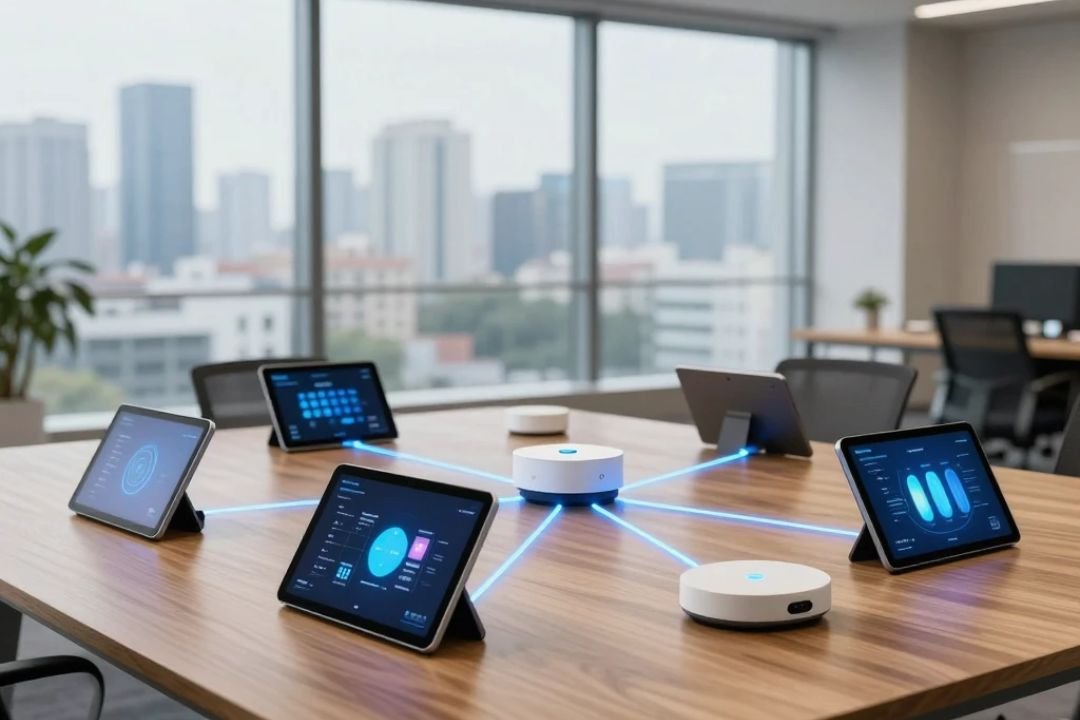
The Internet of Things (IoT) has become one of the most transformative technologies of the digital age. From smart homes and wearable devices to industrial automation and connected healthcare systems, IoT is changing how people interact with technology and how businesses operate. By connecting physical devices to the internet, IoT enables real-time communication, automation, and intelligent decision-making powered by data.
As businesses continue to embrace digital transformation, IoT solutions, smart devices, and connected technology are driving innovation across industries. Combined with Artificial Intelligence (AI), Machine Learning (ML), cloud computing, 5G, and edge computing, IoT is creating smarter ecosystems that improve productivity, enhance customer experiences, and reduce operational costs.
In this comprehensive guide, you’ll learn everything about Ultimate IoT Solutions, Devices & Connected Technology, including how IoT works, its benefits, popular devices, industry applications, future trends, implementation strategies, and SEO best practices.
What Is the Internet of Things (IoT)?
The Internet of Things (IoT) is a network of physical objects embedded with sensors, software, and communication technologies that allow them to collect, exchange, and analyze data over the internet.
These connected devices can communicate with each other without requiring constant human intervention, enabling automation and smarter decision-making.
Examples of IoT devices include:
- Smart speakers
- Smart thermostats
- Wearable fitness trackers
- Connected security cameras
- Smart lighting systems
- Industrial sensors
- Smart refrigerators
- GPS-enabled fleet trackers
- Smart irrigation systems
The goal of IoT is to create intelligent environments where devices work together to improve convenience, efficiency, and safety.
How IoT Works
Every IoT system follows a basic workflow that connects devices, data, and users.
1. Data Collection
Sensors gather information such as temperature, motion, humidity, location, pressure, or energy usage.
2. Data Transmission
The collected information is sent via Wi-Fi, Bluetooth, Zigbee, Ethernet, LPWAN, or 5G networks.
3. Cloud or Edge Processing
Data is processed in cloud platforms or on edge devices to generate actionable insights.
4. Analytics
Artificial Intelligence and analytics engines evaluate the data to identify trends, anomalies, and opportunities.
5. User Interaction
Users monitor and control connected devices using mobile applications, dashboards, or voice assistants.
Benefits of IoT Solutions
Businesses and consumers benefit from IoT technology in many ways.
Increased Automation
IoT automates repetitive tasks, improving productivity while reducing human error.
Real-Time Monitoring
Organizations can monitor assets, equipment, and environmental conditions from anywhere.
Cost Reduction
Predictive maintenance minimizes equipment failures and lowers maintenance expenses.
Better Customer Experience
Connected devices enable personalized services and faster response times.
Energy Efficiency
Smart energy systems optimize electricity consumption and reduce waste.
Improved Decision-Making
Real-time data allows organizations to make informed business decisions quickly.
Popular IoT Devices
IoT devices are becoming increasingly common in homes, businesses, and public infrastructure.
Smart Home Devices
Smart homes use internet-connected devices to improve convenience and security.
Examples include:
- Smart door locks
- Smart lighting
- Smart thermostats
- Video doorbells
- Smart speakers
- Home security cameras
- Smart plugs
These devices can be controlled remotely through mobile apps or voice assistants.
Wearable Technology
Wearable IoT devices help users monitor health and fitness.
Popular wearables include:
- Smartwatches
- Fitness bands
- Heart rate monitors
- Sleep trackers
- Smart medical sensors
These devices collect valuable health data that supports healthier lifestyles and remote healthcare.
Industrial IoT Devices
Manufacturing companies rely on Industrial IoT (IIoT) devices for automation.
Common examples include:
- Temperature sensors
- Pressure sensors
- Robotic systems
- Predictive maintenance sensors
- Smart production equipment
These devices improve operational efficiency and reduce downtime.
Connected Vehicles
Modern vehicles use IoT technology for navigation, diagnostics, and safety.
Connected vehicle features include:
- GPS tracking
- Real-time traffic updates
- Remote diagnostics
- Driver behavior monitoring
- Predictive maintenance alerts
IoT is also playing a critical role in the development of autonomous vehicles.
Connected Technology Across Industries
IoT has become essential in nearly every major industry.
Healthcare
Healthcare providers use IoT for:
- Remote patient monitoring
- Wearable health devices
- Smart hospital equipment
- Medication tracking
- Telemedicine support
Connected healthcare improves patient outcomes while reducing hospital visits.
Manufacturing
Industrial IoT enhances production through:
- Predictive maintenance
- Quality control
- Equipment monitoring
- Supply chain optimization
- Automated production systems
Manufacturers improve efficiency while lowering operational costs.
Agriculture
Smart farming solutions help farmers maximize crop yields.
IoT applications include:
- Soil moisture sensors
- Weather monitoring
- Livestock tracking
- Automated irrigation
- Precision agriculture
These technologies conserve resources while increasing productivity.
Retail
Retail businesses use IoT to improve customer experiences.
Examples include:
- Smart shelves
- Inventory tracking
- Digital payment systems
- Customer analytics
- Personalized promotions
Retailers gain better visibility into customer behavior and inventory management.
Smart Cities
Governments are adopting IoT to improve urban living.
Applications include:
- Smart traffic lights
- Intelligent parking
- Waste management
- Air quality monitoring
- Public safety systems
- Smart street lighting
Smart city initiatives enhance sustainability and improve public services.
Essential Technologies Behind IoT
Several technologies work together to power modern IoT solutions.
Artificial Intelligence (AI)
AI enables connected devices to analyze data and make intelligent decisions automatically.
Applications include:
- Predictive maintenance
- Voice assistants
- Smart surveillance
- Personalized recommendations
Edge Computing
Edge computing processes data closer to the device rather than relying entirely on cloud servers.
Benefits include:
- Lower latency
- Faster processing
- Improved privacy
- Reduced bandwidth usage
Cloud Computing
Cloud platforms provide scalable storage, computing power, and analytics for IoT deployments.
Cloud services help organizations manage millions of connected devices efficiently.
Big Data Analytics
IoT devices generate enormous amounts of information.
Big Data analytics transforms this data into actionable business insights that improve performance and support strategic planning.
5G Connectivity
The rollout of 5G networks significantly improves IoT performance.
Advantages include:
- Faster communication
- Ultra-low latency
- Higher network capacity
- Support for billions of connected devices
IoT Security Challenges
As more devices connect to the internet, cybersecurity becomes increasingly important.
Common challenges include:
Weak Passwords
Default passwords make devices vulnerable to attacks.
Data Privacy
IoT devices often collect sensitive personal and business information.
Malware Attacks
Hackers may target unsecured IoT devices to access networks.
Device Authentication
Every connected device should be verified before joining an IoT ecosystem.
Software Updates
Outdated firmware may contain security vulnerabilities.
Organizations should implement encryption, multi-factor authentication, network segmentation, and regular updates to strengthen IoT security.
Best Practices for Implementing IoT Solutions
Successful IoT projects require careful planning and execution.
Follow these best practices:
- Clearly define business objectives.
- Select scalable IoT platforms.
- Prioritize cybersecurity from the beginning.
- Monitor device performance continuously.
- Analyze collected data regularly.
- Integrate AI for smarter automation.
- Keep firmware updated.
- Train employees on IoT technologies.
- Test systems before full deployment.
Future Trends in Connected Technology
The future of IoT is evolving rapidly.
AI-Powered IoT
Artificial Intelligence will make connected devices more autonomous and adaptive.
Digital Twins
Virtual replicas of physical assets will improve monitoring, maintenance, and simulation.
Sustainable IoT
Energy-efficient devices and environmentally friendly technologies will become more common.
Blockchain Integration
Blockchain will strengthen IoT security by improving transparency and device authentication.
Autonomous Systems
IoT will continue supporting self-driving vehicles, robotics, drones, and intelligent manufacturing systems.
Smart Healthcare Expansion
Remote patient monitoring and wearable medical devices will continue to improve healthcare accessibility.
Career Opportunities in IoT
The rapid growth of IoT has created strong demand for skilled professionals.
Popular careers include:
- IoT Developer
- Embedded Systems Engineer
- IoT Solutions Architect
- Cloud Engineer
- IoT Security Specialist
- Network Engineer
- AI Engineer
- Data Scientist
- Robotics Engineer
- Systems Integrator
Professionals with expertise in programming, networking, cybersecurity, and cloud computing are well-positioned for success in this field.
Conclusion
The Ultimate IoT Solutions, Devices & Connected Technology ecosystem is transforming industries by connecting people, machines, and processes in smarter and more efficient ways. From intelligent homes and wearable devices to industrial automation and smart cities, IoT enables organizations to leverage real-time data, improve operational efficiency, and deliver innovative services.
As technologies such as Artificial Intelligence, edge computing, cloud platforms, Big Data analytics, and 5G continue to advance, the capabilities of IoT will expand even further. Businesses that invest in secure, scalable, and future-ready IoT solutions today will be better equipped to innovate, remain competitive, and thrive in an increasingly connected digital world.
